
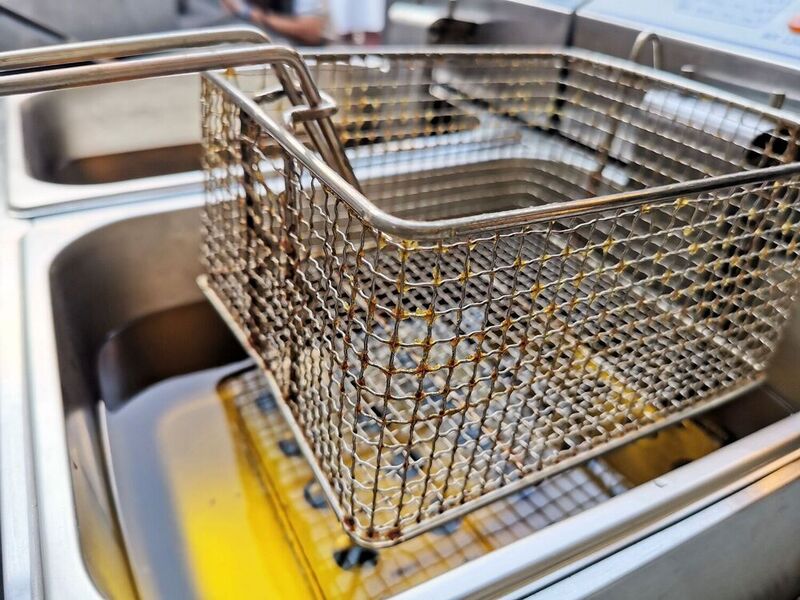
Walk down any busy street in Nairobi, Mombasa, Kisumu or Nakuru at lunchtime and you will smell the same thing: golden chips, crispy chicken, samosas and mandazi hitting hot oil. For fast-food businesses in Kenya, the deep fryer is not just another appliance. It is the machine that produces your best-selling items, and when it fails or underperforms, your whole kitchen feels it.
That is why the question of gas versus electric matters so much. Choosing the best commercial deep fryer in Kenya is not about picking the most expensive model or the cheapest listing you find online. It is about matching the fuel type, capacity and build quality to your menu, your location, your power supply and your budget.
Why Your Fryer Choice Matters More Than You Think
Choosing the right deep fryer directly affects your kitchen’s efficiency, food quality and profitability. Here is why it matters:
-
Faster Cooking: A reliable fryer heats quickly and maintains temperature, helping you serve customers faster during peak hours.
-
Consistent Food Quality: Proper temperature control ensures crispy chicken, golden chips and evenly fried snacks in every batch.
-
Lower Operating Costs: An energy-efficient fryer helps control electricity or gas consumption and reduces daily operating expenses.
-
Better Oil Management: Stable cooking temperatures extend oil life, reducing frequent oil changes and replacement costs.
-
Higher Productivity: The right fryer capacity allows your staff to handle more orders without creating unnecessary queues.
-
Reduced Food Waste: Consistent frying results minimize poorly cooked food, burnt products and rejected customer orders.
How Gas Deep Fryers Work
Gas deep fryers use LPG or natural gas to heat cooking oil through burners positioned beneath or inside the frying tank. Their operation involves several key components:
-
Gas Burners: Generate heat from LPG or natural gas to warm the cooking oil.
-
Frying Tank: Holds the cooking oil and food during the frying process.
-
Heat Transfer Tubes: Distribute heat evenly throughout the oil for consistent cooking.
-
Thermostat Control: Regulates oil temperature to prevent overheating or undercooking.
-
Safety Valve: Controls gas flow and automatically shuts it off if the flame goes out.
Advantages of gas fryers
- Fast heat-up and quick recovery. Gas delivers a large amount of heat quickly. When you drop a heavy basket of cold chips or frozen chicken into the oil, the temperature falls, and a gas fryer typically brings it back up fast. This is why many high-volume kitchens favour gas.
- Independence from the grid. Kenyan business owners know that power outages and voltage fluctuations happen. A gas fryer keeps working when the lights go out, which is a major advantage for roadside outlets, food courts and areas with unreliable supply.
- Suitable for high output. Large gas fryers, such as the single 18-litre gas units commonly advertised by Kenyan suppliers for restaurants and fast-food outlets, are built for continuous heavy frying.
- Portability for the right setup. With a gas cylinder, you can set up a fryer where there is no three-phase power at all, which suits food trucks and market stalls.
- Potentially lower running cost. In many markets, gas is cheaper per unit of heat than electricity. Whether that holds for you depends on current LPG and KPLC prices, which we cover below.
Disadvantages of gas fryers
- Higher purchase and installation cost. Gas models need burners, valves, pipework and a safe place to store cylinders. Listings we found for a single 18-litre gas fryer sat around KSh 48,000, noticeably more than basic electric units.
- Safety requirements. Gas means leak risk. You need proper hoses, regulators, ventilation and regular checks.
- Heavier carbonisation of oil. Gas fryers can darken oil faster if they are not cleaned and filtered regularly, although good maintenance prevents any flavour difference.
- More ventilation needed. Combustion produces heat and exhaust, so your kitchen needs good airflow and extraction.
How Electric Deep Fryers Work
Electric deep fryers use electrical heating elements to heat cooking oil directly inside the frying tank. Their operation relies on several important components:
-
Heating Elements: Convert electrical energy into heat to warm the cooking oil.
-
Frying Tank: Holds the oil and food during the frying process.
-
Thermostat Control: Allows operators to adjust and maintain the desired cooking temperature.
-
Temperature Sensor: Monitors oil temperature and regulates the heating elements.
-
Power Supply: Uses electricity to operate, with commercial models requiring different power ratings depending on their capacity.
-
Safety Features: Help prevent overheating and protect the equipment during operation.
Advantages of electric fryers
- Lower upfront cost. Electric fryers are simpler to build, so they are generally cheaper to buy. Kenyan online listings range from small 6-litre units for a few thousand shillings to large freestanding 38-litre machines from Nairobi suppliers.
- Easy installation. If you have a suitable socket and adequate power, you plug in and start. There are no cylinders, hoses or burners to manage.
- Precise temperature control. Submerged elements and digital or adjustable thermostats help hold steady temperatures, which supports consistent colour and texture.
- Cleaner operation. With no combustion, electric fryers produce less exhaust heat and are easier to place in compact kitchens, malls and indoor food courts.
- Compact and space-saving. Countertop and double-tank electric models fit neatly into small kitchens and fast-food workstations that combine a fryer with a griddle.
Disadvantages of electric fryers
- Dependence on stable power. Frequent outages or low voltage will interrupt service. A generator or solar backup adds cost.
- Higher electrical load. A large commercial electric fryer can draw several kilowatts. Bigger models may require three-phase supply and proper circuit protection, so an electrician should confirm your setup.
- Slower recovery in cheap models. Light-duty units sold for home or small commercial use can struggle when you fry large, frozen batches back to back.
- Possibly higher energy bills. Depending on tariffs and usage, electricity can cost more than LPG for heavy daily frying.
Gas vs. Electric: Head-to-Head Comparison
| Factor | Gas Fryer | Electric Fryer |
|---|---|---|
| Purchase price | Generally higher | Generally lower |
| Installation | Needs gas line or cylinder, ventilation | Needs adequate socket or dedicated circuit |
| Heat-up and recovery | Very fast, strong for peak hours | Good in quality units, weaker in light-duty models |
| Power cuts | Keeps working | Stops without backup |
| Temperature precision | Good with a quality thermostat | Excellent in most models |
| Running cost | Often lower at high volume (check local prices) | Varies with KPLC tariff and usage |
| Portability | High, with a cylinder | Limited by power access |
| Safety focus | Leak checks, ventilation | Electrical safety, earthing |
| Best for | High-volume outlets, trucks, unreliable power | Indoor kitchens, malls, small to medium shops |
No single column wins every row. The right answer depends on which rows matter most to your business.
Understanding Running Costs in Kenya
Purchase price is only part of the story. Over a year or two, fuel and electricity can cost more than the fryer itself, so it pays to do the arithmetic with your own numbers.
For gas: find out what you currently pay to refill your cylinder, and how many days a cylinder lasts when the fryer runs through your normal trading hours. Divide the refill cost by the number of days to get your daily gas cost.
For electric: check the power rating on the fryer (for example, 3kW) and how many hours it is actually heating each day. Multiply kilowatts by hours to get kilowatt-hours, then multiply by your KPLC tariff. Remember that a fryer does not draw full power continuously; it cycles on and off to hold temperature, but it still works hardest during heavy frying.
Compare the two daily figures, then add the cost of any backup you would need for the electric option, such as a generator or inverter. Also consider the purchase price difference. A gas fryer that costs more upfront may pay itself back within months if it cuts your daily running costs, while an electric fryer might win if you only fry for a few hours a day.
One caution: international comparisons often say gas is cheaper to run, and that is frequently true elsewhere, but Kenyan tariffs and LPG prices shift. Always check current prices rather than relying on general rules.
Safety and Installation Considerations
Both fryer types are safe when installed and used properly, and both can be dangerous when they are not. Hot oil causes serious burns, and fires are a real risk in any frying kitchen.
For gas fryers:
- Store cylinders outdoors or in a well-ventilated, secure area, away from direct heat.
- Use quality regulators and hoses, and replace them at the first sign of wear.
- Check connections for leaks with soapy water, never a flame.
- Choose models with flame-failure protection and make sure your kitchen has proper ventilation.
For electric fryers:
- Confirm your wiring can carry the load, and use properly rated cables, sockets and circuit breakers.
- Make sure the unit is earthed and keep water and cables well apart.
- Avoid overloaded extension cords, which are a common cause of electrical fires.
- Choose models with a high-limit cut-out that switches off the elements if the oil overheats.
For both: never leave hot oil unattended, keep oil levels between the marked minimum and maximum lines, keep a suitable fire extinguisher (such as a wet chemical or Class F type, or a fire blanket) within reach, and train every staff member who handles the fryer.
Which Is Right for Your Business?
Here is a practical way to decide, based on common Kenyan fast-food scenarios.
Choose gas if:
- You run a high-volume outlet frying chicken, chips and snacks all day.
- Your area has frequent power cuts and you cannot afford downtime.
- You operate a food truck, kiosk or roadside stall without strong power access.
- You have space for safe cylinder storage and good ventilation.
Choose electric if:
- You operate in a mall, food court or indoor space where gas is restricted or impractical.
- Your kitchen is compact and you want a plug-and-play setup.
- You have stable power or a reliable backup system.
- You are starting small and want a lower initial investment, then plan to upgrade as sales grow.
Consider both if: you run a larger operation. Many successful kitchens keep a gas fryer as the workhorse for peak hours and an electric unit for lighter items, or as a backup when one machine is down.
What to Look for in the Best Commercial Deep Fryer in Kenya
Whichever fuel you choose, certain features separate a fryer that lasts for years from one that disappoints within months.
- Capacity that matches your volume. A 6-litre unit suits a small start-up or a side station, but busy outlets typically need 12 to 18 litres per tank or more. Double-tank models let you fry different foods without flavour transfer.
- Stainless steel construction. Quality stainless steel resists corrosion, handles heat and cleans easily. Thin or poorly finished metal warps and leaks.
- Reliable thermostat and safety features. Look for an adjustable thermostat, overheat protection, and for gas models, flame-failure protection.
- Fast recovery time. Ask how quickly the fryer returns to temperature after loading a full basket. This matters more than the maximum temperature on the spec sheet.
- Easy cleaning and oil drainage. A drain valve, removable baskets and accessible tanks cut cleaning time and encourage proper maintenance.
- Availability of spare parts and service. Thermostats, elements, burners and baskets eventually wear out. Buy from a supplier who stocks parts and can help when something goes wrong.
- Honest specifications. Be cautious of listings with vague details and unusually low prices. A commercial-grade fryer built for all-day service differs greatly from a light-duty household unit.
- Supplier credibility. Buy from a business that offers delivery, installation guidance and after-sales support, rather than an anonymous seller you cannot reach later.
Maintenance Tips to Protect Your Investment
Even the best commercial deep fryer in Kenya will fail early without basic care. A few habits make a big difference:
- Filter oil daily to remove crumbs and burnt particles that darken oil and spoil flavour.
- Change oil on schedule, and sooner if it smells off, foams or turns very dark.
- Clean the tank regularly with a proper boil-out or degreasing routine, and rinse thoroughly before refilling.
- Do not overfill baskets, which drops the oil temperature and produces greasy food.
- Inspect elements, burners, hoses and cables for wear, and fix issues quickly.
- Keep a simple maintenance log so you can spot recurring problems and plan replacements.
Gas or Electric?
There is no universal winner. Gas is the stronger choice for high-volume frying, unreliable power and mobile setups. Electric is ideal for compact indoor kitchens, easy installation and a lower starting budget. The best commercial deep fryer in Kenya for your business is the one that fits your daily volume, your location and your budget, and that comes from a supplier who stands behind it.
Before you buy, write down your expected daily batches, check your power and gas situation, calculate running costs with real local prices, and compare specifications rather than headlines.
Get Your Commercial Fryer from Shine Kitchenware
Choosing between gas and electric is easier when you have a knowledgeable supplier to guide you. That is where Shine Kitchenware comes in. Whether you are launching a new chips-and-chicken outlet, upgrading a busy restaurant kitchen or fitting out a food truck, Shine Kitchenware can help you find commercial kitchen equipment that suits your menu, space and budget. Ready to find the best commercial deep fryer in Kenya for your business? Contact ShineKitchenware.co.ke today to discuss your requirements, ask about available gas and electric fryers, and get equipped to serve crispy, consistent food that keeps customers coming back.

 No products in the cart.