
Operating a profitable butchery, meat shop, or supermarket meat counter in Kenya’s vibrant retail sector requires absolute mastery over cold chain management. Whether you are running a neighborhood butchery in Nairobi’s bustling market districts, a high-volume meat retail shop in Mombasa, or a supermarket meat section in Nakuru, meat is one of the most perishable and capital-intensive inventories you handle. A single temperature failure or improper storage method can lead to rapid bacterial growth, weight loss through dehydration, unappealing discoloration, and catastrophic inventory write-offs.
Understanding the operational differences, preservation science, energy consumption profiles, and the current Butchery Display Fridge Price in Kenya is essential for making an investment that protects your profit margins and guarantees food safety.
1. The Science of Meat Spoilage and Preservation in Kenya’s Climate
Meat is highly susceptible to spoilage due to its high moisture content, neutral pH, and rich nutrient profile, which provides an ideal breeding ground for psychrotrophic bacteria such as Pseudomonas, Salmonella, and Listeria. In Kenya’s tropical and high-ambient temperature climate, microbial multiplication accelerates rapidly if cold chain integrity is compromised.
The Critical Temperature Zone
To halt bacterial proliferation, fresh meat must be chilled immediately after processing and held continuously between 0°C and +4°C. Allowing meat temperatures to fluctuate above this threshold triggers rapid protein breakdown, surface slime formation, and foul odors.
The Dual Challenge: Microbial Spoilage vs. Moisture Loss
Meat preservation involves balancing two conflicting physical forces:
-
Inhibiting Bacteria: Requiring low, stable temperatures.
-
Preventing Dehydration (Shrinkage): High-velocity or harsh airflow strips moisture from uncovered meat cuts, causing surface darkening, “bloom” loss, and direct financial losses through weight shrinkage.
Choosing between a cold room and a display fridge depends entirely on how your business balances bulk storage requirements with customer-facing merchandising.
2. Butchery Cold Rooms: The Heavy-Duty Bulk Storage Workhorses
A walk-in cold room is a purpose-built, insulated enclosure constructed from polyurethane (PU) or polyisocyanurate (PIR) panels, powered by an external condensing unit and an internal evaporator. Designed for positive temperatures (chillers operating at 0°C to +8°C) or negative temperatures (freezers at -18°C to -25°C), cold rooms are the foundational backbone of large-scale meat operations.
Operational Advantages of Cold Rooms
-
Massive Bulk Capacity: Cold rooms allow butcheries and meat distributors to buy whole or half carcasses from abattoirs at wholesale bulk rates, storing them safely on heavy-duty overhead meat rails and stainless steel shelving racks.
-
Uncompromised Temperature Stability: Because walk-in spaces contain a large volume of chilled air, opening the heavy insulated door causes minimal temperature fluctuation compared to small glass-door refrigerators.
-
Extended Shelf Life: Carcasses and primal cuts stored in a humidity-controlled chiller cold room retain their structural integrity and freshness for 7 to 14 days, enabling orderly butchery processing and portioning.
-
Wholesale Scalability: If your business supplies restaurants, hotels, or multiple retail branches, a cold room provides the high-capacity staging ground required to scale operations.
Limitations in Retail Environments
While cold rooms excel at bulk storage, they are hidden away in the back-of-house or stockrooms. Customers cannot browse cuts inside a cold room; therefore, a cold room cannot function as a standalone point-of-sale merchandising unit.
3. Commercial Display Fridges: The Front-Line Merchandising Powerhouses
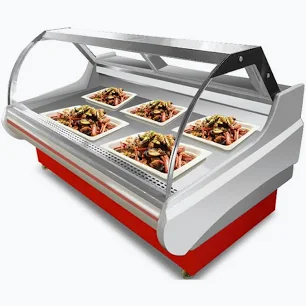
Commercial display fridges—specifically serve-over meat counters, curved glass chillers, and vertical glass-door merchandisers—are engineered to bridge the gap between food preservation and point-of-sale marketing.
Understanding the Butchery Display Fridge Price in Kenya
For startup butcheries and retail shops, capital expenditure planning starts with evaluating market rates. The Butchery Display Fridge Price in Kenya varies based on physical dimensions, glass configuration, compressor power, and whether the unit is imported or custom-fabricated locally with food-grade stainless steel beds.
-
4-Foot Serve-Over Meat Display Chillers: Typically range between KES 75,000 and KSh 80,000, making them ideal for compact neighborhood butcheries and kiosks.
-
5-Foot Meat Display Chillers: Average between KES 85,000 and KSh 90,000, offering extended display surface area for beef, goat, chicken, and pork cuts.
-
6-Foot and Larger Commercial Meat Counters: Range from KES 100,000 to over KSh 130,000, frequently featuring curved Low-E heated glass to prevent fogging, integrated LED illumination, and dual-zone temperature control.
Operational Advantages of Display Fridges
-
Visual Merchandising & Impulse Buying: In retail meat sales, presentation drives revenue. Illuminated, crystal-clear glass display cases showcase the vibrant red “bloom” of fresh beef and lamb, directly enticing walk-in customers.
-
Direct Point-of-Sale Access: Serve-over counters feature sliding or hinged glass service panels that allow attendants to weigh, cut, and package meat directly for customers without breaking the internal cooling envelope.
-
Advanced Airflow Engineering: Quality commercial meat display chillers utilize gentle, fan-assisted or gravity coil cooling designed to maintain high relative humidity, preventing meat cuts from drying out and turning dark during operating hours.
4. Head-to-Head Comparison: Cold Rooms vs. Display Fridges
| Feature | Walk-In Butchery Cold Room | Commercial Meat Display Fridge |
| Primary Function | Bulk storage, carcass hanging, and inventory aging | Customer-facing presentation and active retail sales |
| Capacity | High volume (measured in cubic meters; stores multiple carcasses) | Moderate volume (measured in feet/liters; holds daily display cuts) |
| Customer Visibility | None (Back-of-house storage) | High visibility (Front-of-house merchandising) |
| Energy Consumption | Highly efficient per cubic meter for bulk stock; requires 3-phase power for large units | Moderate to high continuous power draw due to frequent glass exposure and lighting |
| Moisture Control | Excellent for whole cuts with minimal surface dehydration | Requires specialized humidity-managed coils to prevent meat surface drying |
| Ideal Business Model | Slaughterhouses, wholesalers, supermarkets, and large butcheries | Retail butcheries, supermarkets, delis, and meat shops |
5. The Ultimate Strategy: Why Successful Butcheries Need Both
Framing cold rooms and display fridges as an “either/or” choice is a common strategic error for new meat business owners. In reality, high-performing commercial meat operations in Kenya utilize both systems in tandem as an integrated cold chain ecosystem:
-
The Back-End Cold Room (The Vault): When livestock carcasses or bulk boxed cuts arrive from suppliers, they are immediately offloaded into the walk-in cold room. Here, meat rests at a stable 0°C to +2°C, aging safely and maintaining zero bacterial growth while awaiting daily butchery processing.
-
The Front-End Display Fridge (The Showcase): Each morning, the butchery staff transfers precise quantities of portioned steaks, chops, ribs, and minced meat from the cold room into the front-of-house serve-over display fridge.
This symbiotic workflow ensures that bulk inventory remains undisturbed and perfectly chilled, while customers enjoy an appetizing, hygienic display of fresh cuts ready for purchase.
6. Best Practices to Prevent Meat Spoilage in Kenyan Retail Operations
Investing in premium refrigeration equipment is only half the battle. To eliminate meat spoilage and maximize equipment lifespan, implement these operational protocols:
-
Strict First-In, First-Out (FIFO) Rotation: Always organize stock so that older cuts are displayed and sold before newly processed inventory.
-
Never Overload Display Counters: Stacking meat cuts too high blocks internal airflow vents inside display fridges, creating warm pockets where bacteria can multiply rapidly.
-
Maintain Hygiene and Sanitation: Clean stainless steel interior decks and glass panels daily using food-safe sanitizers. Organic meat acids and blood residues can pit inferior metals and foster microbial growth if neglected.
-
Regular Condenser Maintenance: Dust and debris clog condenser coils in Kenya’s dusty commercial environments, forcing compressors to work harder, consume more electricity, and risk sudden temperature failure. Service your refrigeration systems quarterly.
Upgrade Your Butchery Infrastructure with Shine Kitchenware
Preventing meat spoilage, eliminating inventory shrinkage, and projecting a professional image are the cornerstones of a thriving meat business in Kenya. Whether you are scaling up to a walk-in cold room or searching for the best Butchery Display Fridge Price in Kenya to elevate your shop front, partnering with reliable commercial equipment suppliers guarantees long-term operational success.
When you need durable, high-performance refrigeration units, stainless steel butchery counters, bone saws, and meat mincers designed to withstand rigorous commercial demands, look no further than shinekitchenware.co.ke. From sleek serve-over glass display chillers to heavy-duty commercial kitchen appliances, Shine Kitchenware provides top-tier, competitively priced solutions tailored specifically for Kenyan butcheries, restaurants, and supermarkets—backed by expert customer support and fast countrywide delivery across Nairobi, Mombasa, Kisumu, Nakuru, and beyond.


 No products in the cart.