
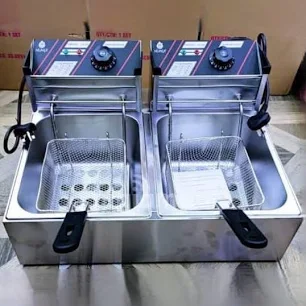
For a chips, chicken or snack business, the fryer is the heart of the kitchen. It works for hours every day, heats to high temperatures, sits in contact with hot oil and food debris, and is rarely switched off during trading hours. So it is no surprise that many fryers give up long before their time. A machine that should have lasted five years may need a new thermostat in six months, and a new element a few months after that. Then, one busy Friday evening, it stops altogether.
The good news is that most early fryer failures are preventable. They usually come from a handful of predictable causes: the wrong machine for the job, poor oil management, rough handling, unstable power and missed maintenance.
The Real Cost of an Early Breakdown
When a fryer fails, the repair bill is only part of the loss. Consider what else happens:
- Lost sales. If your fryer is down at lunchtime, you cannot sell chips, chicken or samosas, and customers walk to the next stall.
- Wasted stock. Marinated chicken, cut potatoes and prepared snacks may spoil while you wait for repairs.
- Emergency purchases. Panic buying a replacement often means paying more or settling for a poor-quality machine.
- Staff disruption. Idle staff, upset customers and a stressful kitchen all carry hidden costs.
For these reasons, protecting your fryer is one of the cheapest ways to protect your income.
Why Commercial Deep Fryers Fail Early
1. Buying a light-duty fryer for heavy-duty work
This is the most common mistake we see in the market. Kenyan online listings include everything from small home-use fryers priced at a few thousand shillings to proper commercial machines. A 6-litre fryer designed for occasional home cooking is simply not built for eight to twelve hours of daily frying. Its element, thermostat and body are designed for light use, so they wear out quickly under commercial load.
A genuine heavy duty electric deep fryer in Kenya will typically have a stronger heating element (for example, 3kW for a 12-litre unit), a sturdier thermostat, thicker stainless steel and components designed for continuous service. Price differences between light-duty and heavy-duty machines often reflect real differences in build quality, not just branding.
2. Running the fryer without enough oil (dry firing)
Electric fryer elements are designed to be submerged in oil. If the oil level drops below the minimum mark, or you switch the fryer on with an empty tank, the element overheats rapidly. This can burn out the element, damage the thermostat and even start a fire. Dry firing is one of the fastest ways to destroy a fryer, and it often happens at the end of a long shift or when staff are busy.
3. Dirty, old or degraded oil
Oil that is never filtered or changed turns into a thick, dark, carbonised mixture. Burnt food particles and carbon bake onto the element and the tank walls, forming an insulating layer. The element then has to work harder to heat the oil, which causes overheating, uneven cooking and eventual failure. Old oil also foams more, smokes at lower temperatures and makes food taste bitter.
4. Water in the oil
Water and hot oil do not mix. Wet potatoes, ice crystals on frozen food, water left in the tank after cleaning, or a rushed rinse can cause violent spitting and boil-over. Besides the burn risk, moisture speeds up oil breakdown and can damage the controls and wiring if splashes reach them.
5. Overloading the basket
Piling in too much food at once drops the oil temperature sharply and forces the element to run flat out to recover. Do this all day and the element, thermostat and contactors wear faster. It also produces soggy, greasy food, so overloading hurts both the machine and your product.
6. Unstable electricity and poor wiring
Kenyan businesses often face voltage fluctuations, surges and outages. A sudden surge when the power returns can burn out the thermostat, control board or element. Poor wiring, loose connections, overloaded extension cables and inadequate circuit protection add to the problem. A fryer drawing several kilowatts on an under-rated cable or a shared socket is an accident waiting to happen. Overheated plugs and melted cables are warning signs you should never ignore.
7. Skipped cleaning and routine maintenance
Fryers need regular cleaning. Grease build-up on the body, around the controls and in the drain valve can lead to blockages, leaks and fire hazards. Many fryers are kept in service until something breaks, rather than being checked and serviced regularly. By the time a symptom appears, the underlying problem has often been developing for months.
8. Harsh cleaning and rough handling
Abrasive pads, harsh chemicals left in the tank, and metal tools scraped against the surface can scratch stainless steel and encourage corrosion. Dropping heavy baskets into the tank, banging the drain valve or yanking cables also shortens the life of the machine.
9. Poor placement and ventilation
A fryer squeezed against a wall, placed beside a hot cooker or sitting in a steamy, poorly ventilated kitchen runs hotter and wears faster. Heat and grease-laden air can damage electrical components and make the area dangerous for staff.
10. No access to spare parts or service
Even well-made fryers eventually need replacement parts such as thermostats, elements, switches and baskets. If you bought from an anonymous seller who disappears or does not stock parts, a small repair can turn into a replacement purchase.
How to Make Your Fryer Last Longer
Now for the part that saves you money. The following habits are simple, cheap and highly effective.
Start with the right machine
Choose a fryer rated for commercial use and sized for your volume. If you fry chips, chicken and snacks all day, invest in a heavy duty electric deep fryer in Kenya with a strong element, thick stainless steel construction, an adjustable thermostat, overheat protection and a proper drain valve. Match capacity to your peak demand, because a fryer that is constantly pushed past its limit will not last.
Set up your power supply properly
- Have a qualified electrician check that your wiring, socket and circuit breaker suit the fryer’s power rating.
- Use a dedicated circuit for larger fryers instead of sharing sockets with other heavy appliances.
- Make sure the fryer is properly earthed.
- Consider a surge protector or voltage stabiliser if your area has unstable power, and make sure it is rated for the load.
- Avoid long, thin extension cables, which overheat under heavy loads.
Always keep the oil at the right level
Train every staff member never to switch on the fryer unless the oil covers the element and reaches at least the minimum line. Top up oil as needed during the day, and never exceed the maximum line, because overfilling can cause overflow when food is added. Make it a rule: no oil, no power.
Filter oil daily and change it on schedule
Filter the oil at the end of each day, or more often in busy outlets, to remove crumbs and burnt particles. Change oil when it turns very dark, smells burnt, foams excessively or smokes at normal temperatures. Clean oil protects the element, improves food flavour and reduces how hard the fryer has to work.
Keep water out
Shake off or dry excess moisture from potatoes and thawed food before frying. Dry the tank completely after washing and before refilling. Keep ice and water away from the hot oil, and never use water to put out an oil fire. Use a fire blanket or the correct extinguisher instead.
Do not overload the basket
Follow the manufacturer’s guidance on load size. As a general rule, fill baskets no more than about half to two-thirds, and fry in batches during rushes. This keeps oil temperature stable, protects the element and gives you crispier food.
Clean the fryer properly and regularly
- Daily: wipe the outer body, filter oil, remove crumbs and clean baskets.
- Weekly or as needed: drain the oil, scrub the tank gently with a non-abrasive pad, and clean the element area carefully according to the manual.
- Boil-out routine: periodically use a fryer-safe cleaning solution, then rinse thoroughly and dry before refilling.
Always unplug the fryer and let it cool before deep cleaning. Never spray water onto the controls or let moisture enter the electrical compartment.
Use gentle tools and cleaning products
Choose soft brushes and non-abrasive pads for stainless steel. Rinse chemicals completely so no residue remains in the tank. Avoid metal scrapers that gouge the surface, since scratches can trap grease and invite corrosion.
Give it space to breathe
Place the fryer on a stable, level surface with adequate clearance from walls and other heat sources. Make sure your kitchen has good ventilation or extraction, and keep the area around the fryer free of flammable materials.
Inspect regularly and fix small problems fast
A quick weekly inspection can catch issues before they become expensive:
- Check the power cable and plug for cracks, burns or discolouration.
- Look for oil leaks around the drain valve and tank seams.
- Notice whether oil takes longer to heat than before, which can signal a failing element or thermostat.
- Watch for uneven cooking or temperatures that do not match the dial, which can mean a calibration issue.
- Listen and smell for unusual noises, sparking or a burning-plastic odour, and switch off immediately if you notice any.
Keep a simple maintenance log with dates of oil changes, cleaning, repairs and parts replaced. It helps you spot patterns and plan ahead.
Train your staff
Most fryers are not destroyed by one big event but by small daily habits. Teach every person who touches the fryer how to check oil levels, load baskets properly, handle hot oil safely, clean at the end of the shift and report faults early. A short written checklist beside the fryer works wonders.
A Simple Care Schedule You Can Follow
| Frequency | Task |
|---|---|
| Every start of shift | Check oil level, check cable and plug, confirm area is dry and clear |
| During service | Fry in sensible batches, skim crumbs, keep lids and baskets handled gently |
| End of every day | Switch off and cool, filter oil, wipe body, clean baskets |
| Weekly | Inspect cable, valve and body; deeper clean; check thermostat accuracy |
| As needed | Change oil when dark, smoky or foaming; deep clean and boil out the tank |
| Every few months | Arrange a professional check of wiring, element and safety cut-outs |
Warning Signs Your Fryer Needs Attention
Do not wait for a total breakdown. Watch for these early warning signs:
- The oil takes much longer than usual to reach temperature.
- Food cooks unevenly, or the thermostat setting does not match the results.
- The breaker trips repeatedly or the plug feels very hot.
- Oil leaks from the drain valve or tank.
- Strange smells, sparks or smoke from the controls.
- Heavy rust, pitting or damage to the stainless steel.
If you notice any of these, switch off the fryer and have it checked by a qualified technician. Continuing to run a faulty fryer risks both the machine and your safety.
When Repair Makes Sense and When to Replace
A fryer with a worn thermostat or a failed element is usually worth repairing if the body is sound and the parts are available at a fair price. Replacement makes more sense when the tank is leaking or badly corroded, repairs are becoming frequent, or the machine is simply too small for your growing business. When you do replace, learn from the failure and choose a heavy duty electric deep fryer in Kenya from a supplier who stocks spare parts and offers support.
Commercial deep fryers rarely fail early by bad luck. They fail because of light-duty machines used for heavy work, dry firing, dirty oil, water, overloading, unstable power and missed maintenance. The encouraging part is that each of these problems has a simple, low-cost fix. Buy the right machine, power it safely, keep the oil clean and at the right level, clean gently and regularly, train your staff and act on warning signs. Do these things consistently and your fryer can serve your business reliably for years.
Get a Heavy Duty Electric Deep Fryer from Shine Kitchenware
Looking for a heavy duty electric deep fryer in Kenya that is built for the demands of a busy kitchen? Visit shinekitchenware.co.ke and explore commercial kitchen equipment for restaurants, takeaways and fast-food businesses. When you shop with Shine Kitchenware, you can ask about the right fryer size for your volume, get guidance on setup and care, and learn about available options, pricing, delivery and after-sales support before you buy.
Choosing a supplier you can reach after the sale is one of the smartest ways to protect your investment. Don’t wait until your fryer breaks down on your busiest day. Visit shinekitchenware.co.ke today to find a reliable fryer and keep your kitchen frying, serving and earning for years to come.
 No products in the cart.