
A good buffet is a promise: hot food that stays hot, fresh-looking dishes that stay appetising, and guests who help themselves without waiting. In Kenya, where weddings, graduations, corporate events, funerals, church functions and hotel buffets often feed hundreds of people at once, keeping food at the right temperature for hours is one of the biggest challenges a caterer faces.
Two pieces of equipment dominate this job: the bain marie and the chafing dish. They look similar to the untrained eye, and many buyers use the names loosely, but they are built for different situations. Choose the right one and your pilau, stews, ugali, nyama choma sides and vegetables stay safe, tasty and presentable. Choose the wrong one and you may face cold food, wasted fuel, unhappy guests and even food safety risks.
Why Holding Temperature Matters
Cooking food properly is only half the job. Once it is cooked, it must be kept hot enough to stop bacteria from multiplying while it waits to be served. Food held in the “danger zone”, the range between cold and hot temperatures where bacteria grow fastest, can make guests ill, and a single food poisoning incident at an event can ruin a catering reputation.
Food safety authorities commonly advise keeping hot food above roughly 60°C while it is being held for service, and cold food below about 5°C, though exact guidance can vary, so check the requirements that apply to your business and your county public health office. A good food warmer helps you stay on the safe side while keeping food at its best.
Beyond safety, temperature control affects quality. Rice dries out, sauces split, fried items turn soggy and meat toughens when food is held badly. The right equipment keeps texture and flavour intact.
What Is a Bain Marie?
A bain marie (pronounced “ban mah-ree”) is a food-warming unit that holds food pans in a heated environment. The name comes from the classic “water bath” method, in which pans sit in or over hot water so the food heats gently and evenly, without direct flame or scorching.
How it works
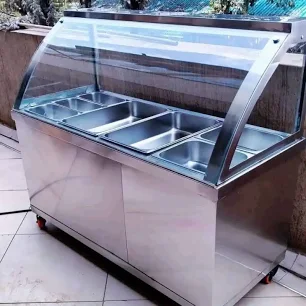
Most commercial bain maries have a stainless steel well that holds a set of standard food pans, often called gastronorm or GN pans. Heat is provided by electric elements or, in some models, gas. In a “wet” bain marie, the well contains water that is heated, and the steam and hot water warm the pans. In a “dry” model, the heating element warms the pans directly without water. Most units have a thermostat or temperature control so you can set and maintain the heat.
Bain maries come in countertop, built-in and freestanding versions, and in different sizes depending on how many pans they hold. Some include a hot cupboard below, glass sneeze guards above, or wheels for easier movement.
Advantages of a bain marie
- Steady, controllable heat. A thermostat lets you hold food at a consistent temperature for long periods.
- Gentle, even warming. Water bath heating reduces the risk of scorching and drying out sauces, stews and soups.
- High capacity. Multiple pans let you serve several dishes at once, ideal for busy buffets and canteens.
- Professional presentation. Neat stainless steel units with sneeze guards look smart in hotels, restaurants and institutions.
- Reliable for long service. Built for daily commercial use in kitchens, hotels and cafeterias.
- Hygienic design. Stainless steel construction is easy to clean and supports food safety standards.
Disadvantages of a bain marie
- Needs a power source (or gas). Most commercial models need a stable electricity supply, which can be a problem at outdoor venues or in areas with unreliable power.
- Less portable. Larger units are heavy and bulky to move and set up.
- Higher upfront cost. Quality bain maries usually cost more than basic chafing dishes.
- Needs water management. Wet models need regular water top-ups and draining, and dry running can damage elements.
- Takes space. They need counter or floor room and proper installation.
What Is a Chafing Dish?
A chafing dish is a portable food-warming setup that typically consists of a stand or frame, a water pan, a food pan that sits inside it, a lid and a heat source underneath. The heat source is usually a fuel canister, such as gel fuel or a similar burner, though electric chafing dishes also exist. The burning fuel heats the water in the lower pan, and the hot water gently warms the food above.
Chafing dishes come in many shapes, such as rectangular and round, and styles, from basic stainless steel to roll-top lid designs that lift up and rest at the back for easy serving.
Advantages of a chafing dish
- Highly portable. Chafing dishes are light, easy to transport and quick to set up, which makes them ideal for outside catering.
- No electricity needed (for fuel-heated types). They work in gardens, tents, halls, churches and open venues where power is limited.
- Lower cost. They are generally cheaper than commercial bain maries, so they are a popular starting point for new caterers.
- Attractive presentation. Many designs look elegant on a buffet table, with polished finishes and roll-top lids.
- Flexible. You can add or remove units as the number of dishes or guests changes.
- Easy to store. They pack away compactly between events.
Disadvantages of a chafing dish
- Less precise temperature control. Fuel burners do not have thermostats, so heat depends on the fuel and conditions. In windy or cold settings, they can struggle to keep food hot.
- Limited holding time. Each fuel canister burns for a set time, so you need to monitor and replace it during long events.
- Ongoing fuel costs. Fuel is a recurring expense, and costs add up across many events.
- Safety care needed. Open flames near food, fabrics and guests demand careful placement and supervision.
- Water level checks. The water pan can run dry, which risks scorching the food and damaging the pan.
- Smaller capacity per unit. You may need several chafing dishes to match the capacity of one large bain marie.
Bain Marie vs. Chafing Dish: Side-by-Side Comparison
| Factor | Bain Marie | Chafing Dish |
|---|---|---|
| Heat source | Electric (sometimes gas) with thermostat | Fuel canister (or electric in some models) |
| Temperature control | Precise and adjustable | Limited and less consistent |
| Portability | Lower, bulky and heavy | High, light and easy to move |
| Needs power | Usually yes | Not for fuel-heated models |
| Holding time | Long, as long as power or gas lasts | Limited by fuel burn time |
| Capacity | High, multiple pans | Lower per unit |
| Upfront cost | Higher | Lower |
| Running cost | Electricity or gas | Fuel purchases per event |
| Best for | Hotels, restaurants, canteens, fixed buffets | Weddings, outdoor events, outside catering, small buffets |
| Presentation | Professional, built-in look | Elegant, portable, decorative |
Which Is Best for Which Situation?
Choose a bain marie if:
- You run a hotel, restaurant, school canteen, hospital kitchen or staff cafeteria with a fixed serving area.
- You serve large volumes over long periods and need consistent temperatures.
- You have reliable power or gas at your serving point.
- You want a professional, built-in buffet or serving line.
- Food safety consistency is a priority, such as in institutional catering.
Choose chafing dishes if:
- You do outside catering at weddings, funerals, parties, church events or open-air functions.
- You need equipment that is easy to carry, set up and pack away.
- You often serve in venues with limited or no electricity.
- You are starting a catering business and want to keep your upfront investment low.
- You host smaller buffets with a handful of dishes.
Consider using both if: you run a growing catering business. Many professionals keep a bain marie for indoor and hotel services and a set of chafing dishes for mobile events. Some outside caterers also use electric bain maries at venues with power and chafing dishes where it is not available.
Matching Equipment to Kenyan Food and Events
Kenyan menus bring their own needs, and your equipment should suit them.
- Rice dishes like pilau and biryani: hold well in covered pans with steady, gentle heat that prevents drying out.
- Stews, curries and soups: thrive in a wet bain marie, where moist heat keeps them from catching on the bottom.
- Ugali, chapati and mandazi: need warm, covered storage to keep them soft, since they dry out quickly in open pans.
- Githeri, beans and vegetables: benefit from consistent heat and regular stirring.
- Fried foods and grilled meats: are best held in well-ventilated warmers, or lightly covered, so they stay crisp instead of steaming.
- Large wedding or funeral buffets: often need multiple pans and several units, so plan your quantity carefully.
Key Features to Look for in a Commercial Bain Marie Food Warmer in Kenya
When shopping for a commercial bain marie food warmer in Kenya, check these features:
- Material and build quality. Look for sturdy, food-grade stainless steel that resists rust and cleans easily.
- Number and size of pans. Make sure the unit matches your menu and guest numbers, and that it takes standard GN pans so replacements are easy to find.
- Thermostat control. An adjustable thermostat lets you hold food at safe temperatures without overcooking it.
- Heating power and speed. A strong, reliable element heats up quickly and recovers temperature after you add food.
- Wet or dry operation. Decide which type suits your menu and maintenance preference.
- Drain tap. A drain valve makes emptying and cleaning the water well much simpler.
- Safety features. Look for overheat protection, well-insulated bodies, and stable construction.
- Sneeze guards and covers. These protect food from contamination during self-service.
- Mobility. Wheels, handles and manageable weight help if you need to move the unit.
- Spare parts and after-sales support. Make sure you can get replacement elements, thermostats and pans.
Key Features to Look for in Chafing Dishes
If you choose chafing dishes, look for:
- Heavy, quality stainless steel that resists dents and holds heat well
- Stable frames that do not wobble with a full pan
- Tight-fitting lids, preferably roll-top styles that stay open without needing to be held
- Deep enough water pans to last through the event
- Reliable fuel holders that are secure and easy to refill safely
- Standard pan sizes that match your serving utensils and food quantities
Safety Tips for Buffets and Outside Catering
Whichever equipment you use, safe practice matters.
- Preheat before serving. Warm the water and the equipment first so food goes into a hot environment.
- Only put hot food into warmers. These units hold heat, they are not designed to reheat cold food from scratch. Bring food up to a safe temperature before placing it in the warmer.
- Check temperatures regularly. Use a food thermometer to confirm hot food stays at a safe temperature.
- Keep the water level right. Do not let water pans run dry, and top up with hot water when needed.
- Watch the fuel. Replace fuel canisters before they run out, and handle fuel carefully with trained staff.
- Place safely. Keep open flames away from decorations, fabrics, wind and children, and place chafing dishes on stable tables.
- Use sneeze guards and lids to protect food from guests and the environment.
- Do not leave food out too long. Follow your local food safety guidance on maximum holding times.
- Keep fire safety equipment nearby. A fire extinguisher or fire blanket should be within reach at every event.
- Train your team. Everyone handling food should know hygiene basics and safe operation of the equipment.
Cleaning and Maintenance
Good care extends the life of your equipment.
- Let equipment cool before cleaning, and never immerse electrical parts in water.
- Drain, wash and dry the water wells and pans thoroughly after each use.
- Remove limescale build-up in water wells periodically, especially in areas with hard water.
- Use non-abrasive cleaners and soft cloths on stainless steel to avoid scratches.
- Check cables, plugs, thermostats and elements for wear and have faults fixed by a qualified technician.
- Store chafing dishes dry and clean, with lids and parts together so nothing goes missing.
Common Mistakes to Avoid
- Buying on price alone. Thin, cheap metal dents, wobbles and holds heat poorly.
- Ignoring power availability. Do not plan an electric bain marie for a venue with no reliable electricity.
- Underestimating quantity. Too few pans or units leads to refilling delays and long queues.
- Letting water run dry. This damages equipment and spoils food.
- Using warmers to reheat cold food. This is both unsafe and ineffective.
- Skipping thermometers. Guessing temperatures is risky.
- Forgetting backup plans. Carry spare fuel, extension cables, thermometers and extra pans for important events.
Bain maries and chafing dishes both do the same essential job, but they suit different needs. A bain marie offers precise, reliable, high-capacity heat for hotels, canteens and fixed serving lines. Chafing dishes offer portability, simplicity and lower cost for weddings, outdoor functions and mobile catering. The best choice depends on your venue, your power supply, your volume and your budget, and many growing caterers end up using both.
Before you buy, think about where you will serve, how many guests you will feed and what dishes you will hold, and choose equipment made from quality stainless steel from a supplier you can trust.
Get a Commercial Bain Marie Food Warmer in Kenya from Shine Kitchenware
Looking for a commercial bain marie food warmer in Kenya that keeps your food hot, safe and beautifully presented? Visit shinekitchenware.co.ke and explore commercial catering and kitchen equipment for hotels, restaurants, caterers and institutions. When you speak with Shine Kitchenware, you can discuss your menu, guest numbers and venue types, compare bain maries and chafing dishes, and ask about pan sizes, heating options, current pricing, delivery and after-sales support. That way you choose equipment that suits your events instead of guessing from a product listing.
 No products in the cart.