
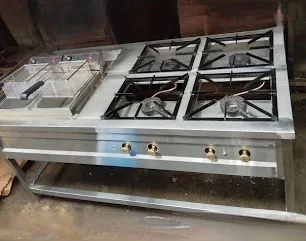
In a busy hotel kitchen, space is tight, orders arrive in waves and every minute counts. Breakfast needs eggs, chapati and sausages. Lunch needs rice, stews and fried fish. Dinner needs grills, chips and sauces. Trying to deliver all of that with a mix of separate, mismatched appliances quickly turns the kitchen into a maze of cables, gas pipes and wasted steps.
That is where the commercial combine unit cooker comes in. Many hotels, restaurants and catering kitchens in Kenya use these multi-function cooking stations to pack several cooking tasks into one compact, organised footprint.
What Is a Commercial Combine Unit Cooker?
A commercial combine unit cooker is a heavy-duty cooking station that brings several cooking functions together in a single stainless steel body. Instead of buying a separate cooker, fryer, griddle and steamer, then finding space and connections for each, you get an integrated unit designed to work as one workstation.
There is no single universal design, but Kenyan suppliers commonly offer units that combine some of the following:
- Gas burners or a gas cooker section for boiling, simmering and general cooking
- A deep fryer section, gas or electric, for chips, chicken, fish and snacks
- A flat-top griddle or chapati plate for chapati, eggs, pancakes, burgers and sausages
- A steamer or dumpling section for steaming dishes
- A chips dump well and storage cabinet underneath for oil, utensils and supplies
For example, listings from Kenyan sellers describe all-in-one stainless steel machines that combine a commercial gas cooker, deep fryer, chapati griddle and steamer in one body, and fast-food workstations that combine a large griddle, a chip collection well, a built-in double-tank electric fryer and a full-length storage cabinet. The exact arrangement varies by manufacturer, so it is important to check the configuration carefully before buying.
How a Combine Unit Works in Practice
A commercial combine unit brings several cooking functions into one workstation, allowing hotel and restaurant staff to prepare different meals simultaneously. Here is how it works:
-
Griddle Section: Used for cooking chapati, eggs, sausages, burgers and other grilled foods.
-
Gas Burner Section: Handles boiling, simmering and preparing large pots of tea, porridge, rice and stews.
-
Deep Fryer Section: Prepares chips, mandazi, fried chicken and other deep-fried foods.
-
Independent Controls: Each cooking section operates separately, allowing staff to use only the equipment needed.
-
Multiple Fuel Options: Depending on the model, sections may use LPG gas, electricity or a combination of both.
-
Improved Kitchen Workflow: Having several cooking functions within reach reduces unnecessary movement and allows one cook to manage multiple dishes.
-
Flexible Meal Preparation: The same unit can handle different cooking requirements during breakfast, lunch and dinner service.
Why Busy Hotels Need a Commercial Combine Unit Cooker
Hotels face unique pressure. They serve guests across breakfast, lunch, dinner and sometimes room service, plus events, conferences and weddings. A combine unit helps in several ways.
1. It saves precious kitchen space
Hotel kitchens are rarely as big as they should be. Separate appliances each need their own footprint, clearance and connections. A combine unit consolidates multiple functions into one body, freeing space for preparation areas, storage and movement. In a crowded kitchen, that extra floor space is worth a lot.
2. It speeds up service
When cooking stations are arranged in a single, logical workflow, cooks spend less time walking and more time cooking. Orders that require frying, griddling and boiling can be handled in one spot, which cuts waiting times for guests, especially during peak breakfast and lunch hours.
3. It supports a varied menu
Hotels need to serve many tastes, from Kenyan favourites like chapati, mandazi, githeri and nyama choma sides to continental breakfasts and fast-food items. A multi-function unit gives your kitchen the flexibility to cook a wide range of dishes without adding more separate machines.
4. It can reduce equipment costs
Buying and installing separate appliances adds up. A combine unit often costs less than purchasing a cooker, fryer, griddle and steamer individually, and it can lower installation costs because gas pipework, electrical connections and ventilation are concentrated in one location. The saving depends on the model and your requirements, so compare quotations carefully.
5. It improves organisation and hygiene
Stainless steel construction is easy to wipe down and supports food safety standards. With everything in one structured unit, cleaning routines become more consistent, and the risk of grease and food debris spreading across the kitchen is reduced. Built-in storage keeps oil, tools and utensils close and tidy.
6. It helps with training and consistency
A well-laid-out unit makes it easier to train new staff, set standard operating procedures and keep dishes consistent across shifts. Everyone knows where each function is and how to use it.
7. It suits outlets of many sizes
While large hotels benefit most, combine units are also popular in guest houses, lodges, restaurants, school canteens, hospital kitchens and fast-food outlets. They are also useful for hotels that run satellite kitchens, poolside bars, outside catering stations or staff canteens.
Combine Unit vs. Separate Appliances
| Factor | Combine Unit Cooker | Separate Appliances |
|---|---|---|
| Space use | Compact, efficient | Needs more floor space and clearance |
| Workflow | Everything within reach | Cooks move between stations |
| Installation | Consolidated connections | Multiple separate installations |
| Flexibility | Moderate; fixed layout | High; you can arrange freely and upgrade parts separately |
| Upfront cost | Often lower than buying all functions separately | Often higher in total |
| Repair impact | One failed section may affect the unit’s overall use in some designs | One failed appliance does not stop the others |
| Best for | Compact, busy kitchens needing multi-tasking | Large kitchens with space for specialised stations |
A combine unit is not right for every kitchen. Very large hotels with dedicated stations for every function may prefer separate, specialised equipment, but for compact and mid-sized kitchens, combine units often deliver the best balance of space, speed and cost.
Commercial Combine Unit Cooker Price in Kenya: What Affects the Cost?
One of the first questions buyers ask is how much a combine unit costs. The honest answer is that the commercial combine unit cooker price in Kenya varies widely, and a single figure would be misleading. Prices depend on several factors, and they change over time, so always request a current written quotation. Here is what drives the cost.
1. Number and type of sections
A unit with two functions costs less than one that combines burners, fryers, a griddle and a steamer. Each extra section adds materials, parts and complexity.
2. Size and capacity
Larger units with more burners, bigger griddle plates or higher-capacity fryers generally cost more. A unit built for a compact guest house kitchen is priced differently from one made for a busy hotel serving hundreds of meals.
3. Materials and build quality
Thick, high-quality stainless steel, strong frames and heavy-duty burners cost more but last longer. Thin metal and light components may be cheaper but wear out faster under daily commercial use.
4. Fuel type and components
Gas fryers, electric fryers, high-pressure burners, low-pressure burners, thermostats and safety valves all affect price. Units with higher-grade components, such as reliable thermostats and flame-failure protection, usually cost more.
5. Brand, origin and supplier
Imported or locally fabricated units differ in price. Brand reputation, warranty terms, support and availability of spare parts also play a role. A cheaper unit from an unreliable seller can cost more in the long run if it breaks down and no one can fix it.
6. Extras and accessories
Baskets, regulators, hoses, hoods, extraction, stands, installation and delivery may be included or charged separately. Always ask what is included in the quoted price.
7. Customisation
Some suppliers can adjust a unit’s layout, dimensions or sections to suit your kitchen. Custom work generally costs more than standard models but may fit your workflow better.
8. Market conditions
Exchange rates, import costs, taxes and demand can shift prices over time, which is why old online listings may not reflect today’s cost.
How to Budget Wisely
When planning your purchase, look beyond the sticker price:
- Total installed cost. Include delivery, installation, gas lines, electrical work, regulators and extraction or ventilation.
- Running costs. Consider how much gas and electricity the unit will use, and compare it with your existing setup.
- Maintenance and parts. Ask about spare parts, servicing and warranty.
- Expected lifespan. A well-built unit that lasts many years is usually better value than a cheaper one that needs early replacement.
- Income potential. Faster service, a wider menu and better organisation can increase sales and offset the investment.
Get quotations from more than one supplier, but make sure you compare like with like: same sections, same materials, same capacity and same inclusions.
What to Check Before You Buy
Use this checklist when evaluating a commercial combine unit cooker:
- Configuration. Does it include the sections you actually need, such as burners, fryer, griddle or steamer?
- Fuel and power requirements. Confirm the gas type, regulator, electrical load and any three-phase needs, and make sure your kitchen can support them.
- Dimensions. Measure your space, including clearance for safe use, cleaning and ventilation.
- Material and thickness. Look for sturdy stainless steel, strong welds and a stable frame.
- Burner and fryer quality. Check burner output, fryer capacity, thermostat reliability and safety features.
- Griddle plate quality. A thick, even plate heats consistently and resists warping.
- Ease of cleaning. Look for removable parts, accessible drip trays and smooth surfaces.
- Safety features. Prefer overheat protection on electric parts and flame-failure protection or reliable valves on gas sections.
- Warranty and after-sales support. Know what is covered and who services the unit.
- Delivery and installation. Confirm whether the supplier delivers, installs and trains your staff.
Safety and Maintenance Tips
A combine unit combines gas, heat, oil and electricity in one place, so safety discipline matters.
- Use regulators and hoses rated for the unit and for LPG, and replace worn parts promptly.
- Check connections for leaks using soapy water, never a flame.
- Keep oil levels correct in fryer sections and never switch on a fryer without oil.
- Keep flammable materials away from burners and griddle surfaces.
- Ensure good ventilation and extraction above and around the unit.
- Clean the griddle, burners and fryer regularly to prevent grease build-up and fire risk.
- Train staff in safe operation, emergency shut-off procedures and fire response.
- Keep a suitable fire extinguisher or fire blanket close by.
- Arrange periodic professional servicing of gas and electrical components.
Common Mistakes to Avoid
- Buying on price alone. The cheapest unit may use thin materials and weak components.
- Ignoring layout. A unit that does not match your menu or workflow will frustrate your cooks.
- Underestimating power and gas needs. Check supply before delivery, not after.
- Skipping ventilation. Multi-function units produce a lot of heat and fumes.
- Forgetting the supplier’s support. Spare parts and service make a big difference over time.
- Not planning for growth. Think about how your menu and volume may change in the next few years.
A commercial combine unit cooker is one of the smartest investments a busy Kenyan hotel or restaurant can make. By bringing burners, fryers, a griddle and other functions together in one organised workstation, it saves space, speeds up service, supports a varied menu and can reduce both equipment and installation costs. The commercial combine unit cooker price in Kenya depends on configuration, size, materials, components, brand and extras, so the smartest approach is to define your needs, request detailed quotations and weigh total value instead of the lowest price.
Get Your Combine Unit Cooker from Shine Kitchenware
Ready to find out the commercial combine unit cooker price in Kenya for your kitchen? Visit shinekitchenware.co.ke and explore commercial kitchen equipment for hotels, restaurants, caterers and institutions. When you speak with Shine Kitchenware, you can discuss your menu, kitchen size and daily volumes, compare configurations, and ask about current pricing, delivery, installation and after-sales support. That way you get a unit that fits your workflow instead of guessing from a listing.
 No products in the cart.